-1.png?w=800&h=800)
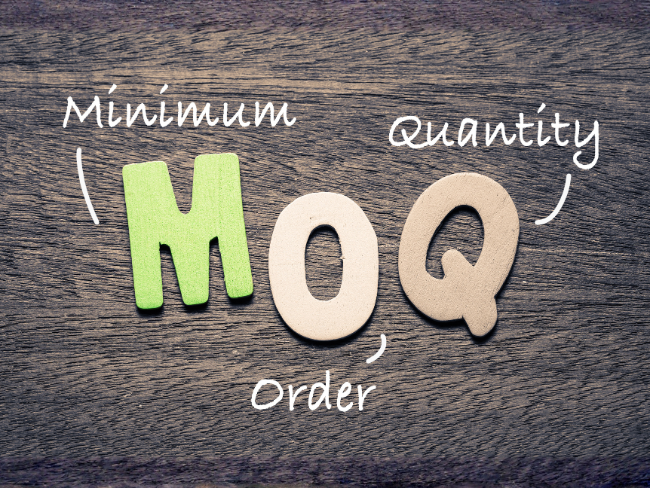
For many fashion brands—especially emerging brands—MOQ (Minimum Order Quantity) is often one of the first questions they ask a manufacturer.
Why does a factory require 300 pieces?
Why not 50? Or 100?
From the buyer's perspective, MOQ can sometimes feel arbitrary. But in reality, MOQ is rarely just a number set by the factory. It is the result of multiple constraints across the entire production chain.
After nearly 20 years in handbag manufacturing, we’ve seen that MOQ is mainly driven by a few key factors.
Let’s break them down.
1. Material Purchasing Requirements
In many cases, the real MOQ comes from upstream suppliers.
For example:
-
PU / vegan leather suppliers often require 300–500 meters per color
-
Lining fabric mills may set minimum dyeing quantities
-
Metal hardware suppliers may require 500–1000 pieces per style
Even if a factory is willing to produce a smaller quantity, the materials themselves may already exceed that number.
This is especially common when a brand develops:
-
custom colors
-
custom textures
-
special hardware finishes
These elements require new production runs at the material supplier, which immediately sets a base MOQ.
2. Production Line Efficiency
Factories are designed for batch production, not one-off items.
Setting up a production line involves:
-
cutting preparation
-
machine setup
-
worker allocation
-
quality control checkpoints
If the order is too small, the setup time may actually exceed the production time.
For example:
| Order Size | Setup Time | Production Time |
|---|---|---|
| 50 bags | similar | very short |
| 300 bags | similar | efficient |
| 1000 bags | similar | highly efficient |
This is why factories often prefer 300–500 units per style as a reasonable production batch.
3. Tooling and Development Costs
Some bags require special molds or tooling, such as:
-
custom metal logos
-
branded zipper pullers
-
embossed plates
-
logo molds
Creating these tools involves fixed costs.
If the order quantity is too small, the cost per bag becomes very high, which is not economical for either the brand or the manufacturer.
MOQ helps distribute these fixed costs across more units.
4. Color and Style Complexity
MOQ can also increase depending on how many variations a brand wants.
For example:
A brand plans to order:
-
1 style
-
4 colors
-
100 units each
This means the factory must:
-
cut materials separately
-
adjust assembly processes
-
manage multiple production batches
In practice, four small orders are often less efficient than one larger order.
This is why some factories set MOQ per color, not just per style.
5. Quality Control and Testing
For export markets—especially the US and Europe—products often require testing for:
-
chemical compliance
-
color fastness
-
material safety
These tests involve laboratory fees and preparation costs.
When production quantities are too small, testing costs per unit become disproportionately high.
So Is MOQ Always Fixed?
Not necessarily.
Experienced manufacturers sometimes find ways to reduce MOQ through smarter planning, for example:
-
sharing materials across styles
-
using stock materials
-
adjusting color strategies
-
combining orders in production schedules
When development is planned early, MOQ can often be more flexible than many brands expect.
The Real Question Behind MOQ
In reality, MOQ is not just a manufacturing rule.
It reflects how the entire supply chain operates—from materials to tooling to production efficiency.
When brands and factories understand these drivers, MOQ discussions become much easier.
Instead of asking:
“Why is the MOQ 300?”
The better question becomes:
“What is driving the MOQ, and how can we optimize it?”
If you're developing a new handbag collection and want to explore practical MOQ solutions, feel free to reach out.
Sometimes a small adjustment in materials or design can make a big difference.